

by Rodrigo Ballon Villanueva
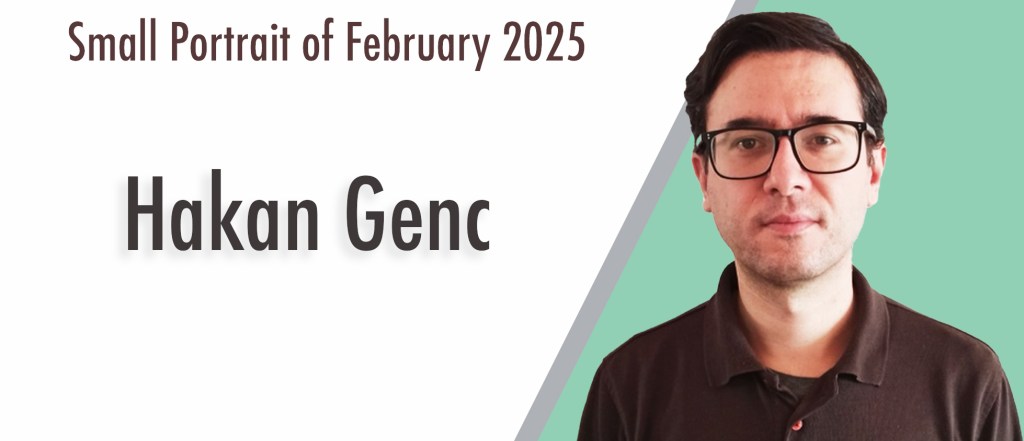
Hakan Genc
It has been quite a bit since we featured Arabic philosophy, so we are thrilled to bring it back with Hakan Genc! Hakan’s research interests focus on ancient Greek and medieval Arabic Aristotelian traditions, including logic, natural philosophy, and metaphysics. He holds undergraduate degrees in Mathematics and Philosophy (2010) from the Middle East Technical University (Turkey). He then was awarded an MA in History (2014) by the Central European University (Hungary – now in Austria). Hakan obtained his PhD in Philosophy (2024) at McGill University (Canada) under the supervision of Stephen Menn and Robert Wisnovsky. His dissertation examined al-Fārābī’s views on unity within his broader metaphysical project, and the earlier philosophical works, Aristotle and ancient Greek commentaries on Aristotle, that informed al-Fārābī’s views on unity.
Hakan is currently a Postdoctoral Research Fellow at the Ludwig Maximilian University of Munich (Germany), where he is involved in a project led by Peter Adamson on the philosophy of the Baghdad school. The ‘Baghdad Peripatetics’ were a group of thinkers who aimed to recover and further develop the Aristotelian tradition in medieval Arabic philosophy during the 10th and early 11th centuries. They translated some works of Aristotle and his ancient Greek commentators from Syriac into Arabic, producing their own commentaries on Aristotle and writing original independent treatises. Despite their interesting and varied philosophical output, these Arabic philosophers remain largely overlooked in current scholarship. As part of this project, Hakan will contribute to producing English translations of a selection of the school’s works and a monograph surveying its philosophical views.
You can read some of Hakan’s work here, and we encourage you to take a look at his fascinating dissertation!
©️Rodrigo Ballon Villanueva | “Hakan Genc”, IPM Monthly 4/2 (2025).
 IPM Monthly