

Celebrating the Establishment of the Xu Fancheng Research Institute at Yangzhou University
By Bichen Yan
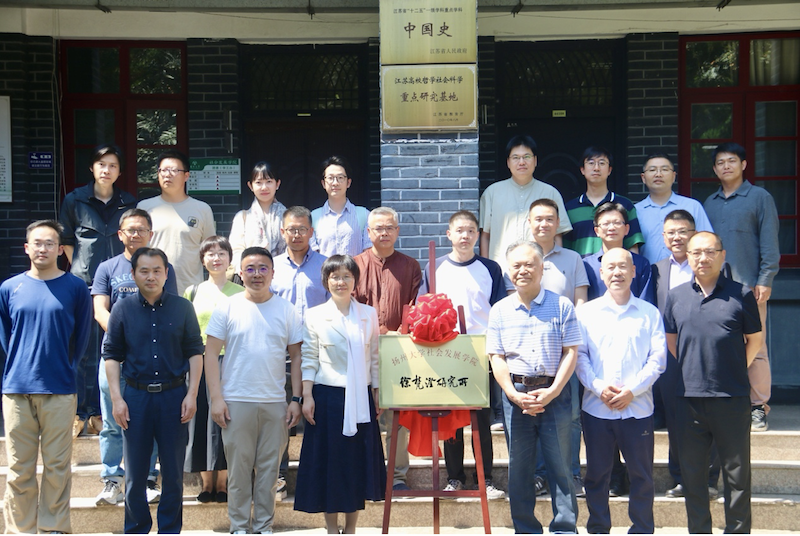
June 2024 – On the afternoon of 28 May 2024, the School of Social Development at Yangzhou University held a grand ceremony to inaugurate the Xu Fancheng Research Institute, followed by an inauguration and development planning conference. The event aimed to promote the development and vision of the Xu Fancheng Research Institute, providing a high-quality platform for the study and dialogue of classical civilizations from China, India, and Europe.
Xu Fancheng (1909-2000), more commonly known as Hu Hsu in India, was a renowned Chinese scholar and translator, Indologist and philosopher. Xu enrolled at the Second National Sun Yat-sen University (today Wuhan University) in 1926, to study History, then shifted to Fudan University in Shanghai the following year to study Western Literature, before moving on to study Fine Arts and Philosophy at the University of Heidelberg in 1929. Before turning 30, Xu began the first of his major translations into Chinese – Nietzsche’s Also Sprach Zarathustra. It is also the first complete Chinese translation of this work. In 1945, Xu received a government grant and headed to Shantiniketan in eastern India. After that time, Xu spent over three decades in India conducting research for the re-establishment of the ancient cultural links between India and China. In 1951, Xu arrived in Pondicherry, best known for its association with Sri Aurobindo, née Aurobindo Ghosh (1872-1950), India’s foremost modern philosopher and revolutionary-turned-mystic. Xu stayed on in the Sri Aurobindo Ashram, the community that grew around the spiritual masters, and was keen to translate Sri Aurobindo’s books into Chinese. It was not until 1978 that Xu left India and returned to mainland China. He worked at the Institute of World Religions at the Chinese Academy of Social Sciences until his death.
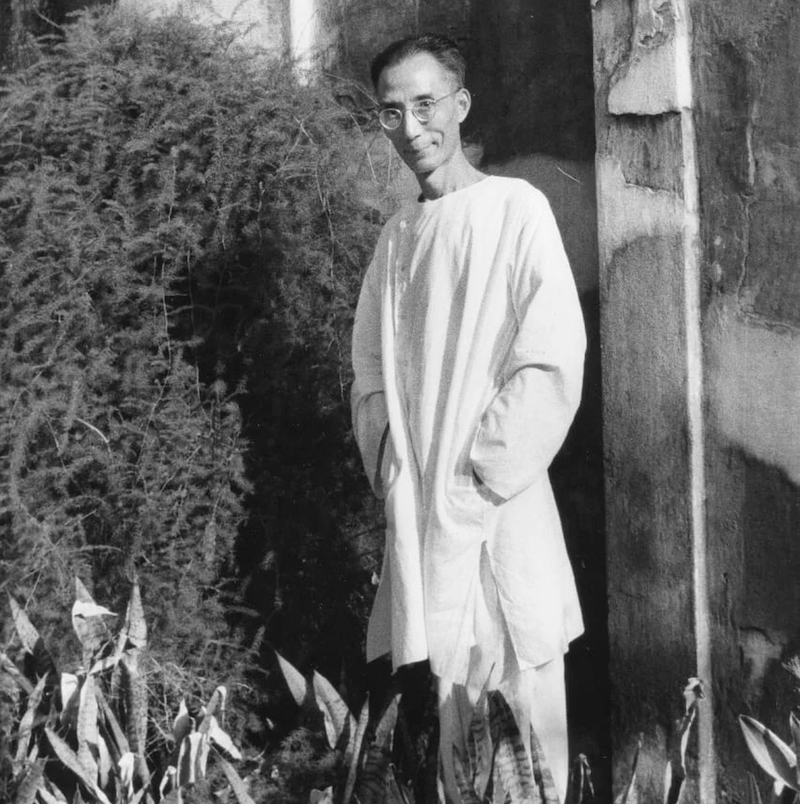
A master of many languages – in addition to German, Sanskrit and English, Xu also knew Greek, Latin and French – he translated 50 of the Upanishads, Nietzsche’s Also sprach Zarathustra, Kalidasa’s lyric poem Meghaduuta (Cloud Messenger), and several of Sri Aurobindo’s works into Chinese. He also wrote introductions to traditional Chinese scholarship in English, including Confucianism (《孔学古微》), Three Theses of Seng-Zhao(《肇论》), Chinese Words: An Analysis of the Chinese Language(《小学菁华》), among others, aiming to introduce China’s classical civilization to India and the West. His extensive writings made significant contributions to the study and dialogue of classical civilizations in China, India, and Europe.
Xu Fancheng’s lifelong dedication to fostering mutual understanding among the classical civilizations of China, India and the West, stemmed from his commitment to what he called “spiritual philosophy”. According to Xu, the essence of spiritual philosophy is to explore the truths of the universe and human life, seeking the roots of all knowledge and scholarship. It is a meta-philosophy that stands at the pinnacle of various civilizational systems.
Xu Fancheng Research Institute will align its future research with Xu Fancheng’s vision, focusing on the theories of major classical civilizations and contributing to the study of spiritual philosophy and related fields of classical civilizations.
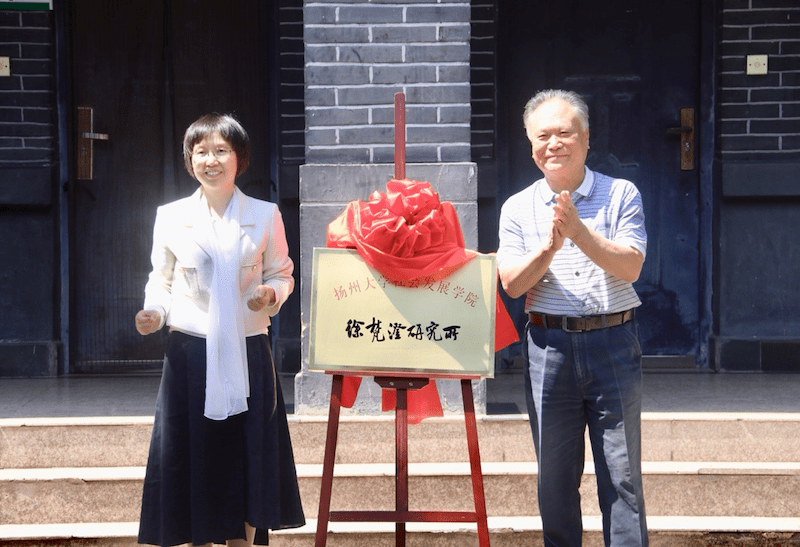
At the ceremony, Professor Cheng Haixia, Vice Dean of the School of Social Development, and Sun Bo, Director of the Xu Fancheng Research Institute and researcher at the Institute of World Religions of the Chinese Academy of Social Sciences, jointly unveiled the plaque of the Xu Fancheng Research Institute.
During the open discussion session, participating scholars shared their insights on the development direction and key research areas of the Xu Fancheng Research Institute from various perspectives, providing valuable ideas and inspiration for its future planning.


Interview with Qinyong Fan (樊沁永)
The following is an interview conducted by the author with Dr. Fan Qinyong, Deputy Director of the Xu Fancheng Research Institute.
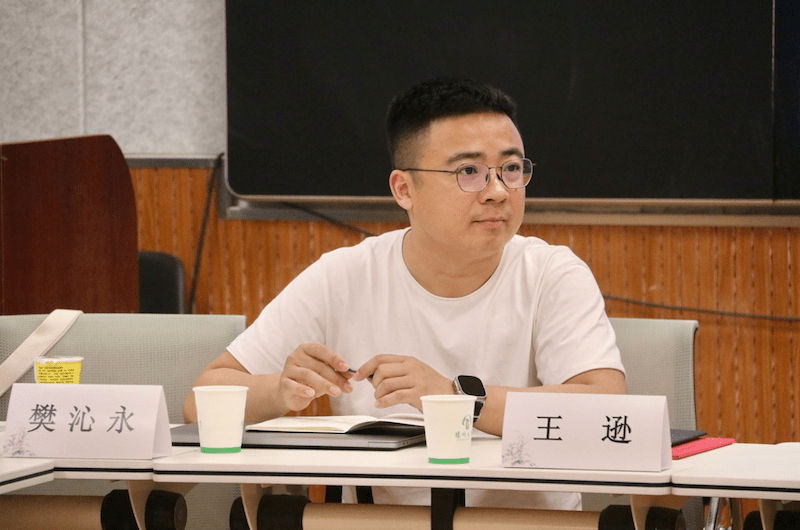
Bichen Yan: Hello, Dr Fan, thank you for accepting my interview.
Qinyong Fan: You’re welcome. I’m glad to have this opportunity to chat with you.
BY: You are the main initiator of the establishment of the Xu Fancheng Research Institute and also the primary responsible for its daily operations. Could you first introduce what motivated you to establish a research institute named after Mr Xu? In your eyes, what kind of person was Mr Xu?
QF: I am delighted to receive attention from European scholars and am very pleased to take this opportunity to introduce the academic work of Mr Xu Fancheng and the basic mission of the Xu Fancheng Research Institute. I want to address the second question first, and then the reasons for establishing the institute will be clearer.
Regarding the Xu Fancheng Research Institute, some scholars suggested naming it the “Institute of Spiritual Philosophy,” which generally would be more rational than directly using a scholar’s name. However, we retained Mr Xu’s name because of a famous Confucian saying: ” It is that humans can promote and enhance the principles which they follow (Dao), rather than those principles (Dao) expanding human talents. ” Mr Xu’s character is as remarkable as his scholarship, and the two are inseparable. The integral experience of civilization and individual lives cannot be divided; individual lives interact with the entirety of civilization, presenting together a path for both civilization and individuals to advance. This path is not singular but holds vast potential for the future.
Although Mr Xu Fancheng’s deeds and academic work are not yet widely known in China, one can gain a clear understanding through Mr Sun Bo’s The Biography of Xu Fancheng, so I won’t repeat those details. Speaking more subjectively, Mr Xu was someone who deeply understood the human soul. He had a professional ability to connect with the essence of every individual and the core of various human civilizations. As long as we continue to care about the values concerning humanity and the cosmos, we will see his efforts and achievements at the pinnacle of human civilization. By “professional”, I mean that he could view the legacies of major civilizations with an equal perspective. Although he had a deep love for Chinese civilization, this did not overshadow his sincere learning and exploration of other civilizations. As long as we continue to explore the true philosophical questions of our own lives, we will receive his guidance. He is a pioneer in the field of spiritual philosophy, waiting for us in the distance. The true philosophical questions I refer to are not about objective truth and knowledge, but more about action. It’s not about literal “knowing” and “truth,” but rather about taking action once we hear and understand. Mr Xu’s exploration of Chinese, Western, and Indian civilizations is characterized by his pursuit of genuine knowledge and its application in his actions. Therefore, his insights and knowledge are infused with his life’s practice, presenting a multidimensional portrayal of the profound heights achieved by the philosophical predecessors of various major civilizations.
Preparing for the institute has always been a wish of Mr Sun Bo, who has been Mr Xu’s assistant for many years and holds a deep affection for him. I became fully aware of this after our first meeting seven years ago. In recent years, as more scholars have shown interest in Mr Xu, there has been a growing desire among us to engage in exchanges, making the establishment of the institute somewhat imperative. Therefore, even though the objective material conditions are still relatively insufficient, we decided to establish the Xu Fancheng Research Institute first. Mr Xu once ran a publication and a publishing house by himself under extremely difficult conditions and quietly engaged in the most difficult work of cultural communication by himself. We have no reason to delay this public academic endeavour due to external reasons.
BY: I know that the institute has a guiding principle that, although perhaps not yet official, is very central: “Taking Mr Xu’s vision as our vision.” In your view, what was Mr Xu’s greatest vision?
QF: I believe Mr Xu eloquently expresses his academic vision in the last part of the preface to On the Unity of the Three Schools of Spiritual Philosophy: Translation and Commentary of Sri Aurobindo’s Heraclitus(《玄理参同》). From my understanding, this vision can be succinctly summarized as “the ultimate destination of all things is the unity achieved through diverse connections and harmony” (万类攸归,多通于一). The relationship he discusses between unity and diversity is different from the relationship between the general and the specific. He refers to unity not as viewing or transforming others from the standpoint of a single civilization, but rather as engaging in genuine, equal exchanges while preserving both the similarities and differences among civilizations. He acknowledges the traditions and qualities that civilizations have accumulated throughout their historical evolution, as well as the right of individuals to choose. However, in his view, what is more important is not horizontal choices among civilizations, but rather the vertical efforts and transformations of individual spirits. It is in this sense that we can integrate the accumulated achievements of different civilizations into our own progress.
BY: If the institute is to adopt these as its vision, what specific areas of work do you envision for the institute in the future?
QF: The work of the Xu Fancheng Research Institute will focus on three main areas. First, the foundational task is the revision of The Collected Works of Xu Fancheng. In 2006, Mr Sun Bo completed the first edition consisting of 16 volumes, which has received feedback from readers over the past decade, including corrections to various details. We plan to publish a revised edition under the auspices of the Institute, supplementing it with works and articles omitted from the first edition. Furthermore, a significant collection of Mr Xu’s calligraphy and painting works remains housed in Pondicherry, India. We are actively working towards facilitating the public publication of these artworks.
Secondly, we will undertake a reassessment and establishment of Xu Fancheng’s academic positioning. His academic journey and vision necessitate that we cannot simply fit him into the lineage of contemporary Chinese philosophy in a superficial manner. Instead, we must re-examine his interdisciplinary efforts from a global perspective, focusing on spiritual philosophy as a thematic framework to reconfigure a specialized academic history.
In this regard, we will continue to advance comparative studies involving Mr Xu and German, French, Indian, Japanese, and Chinese philosophies. Examples include: (1) Discussing the differences between the Nietzsche-Heraclitus tradition, to which Mr Xu attaches great importance and to which he has done a great deal of translation and research, and the Parmenides tradition, which is the source of Western metaphysical thought. And conducting a comparative study linking Mr Xu’s academic thought with twentieth-century French theories represented by Congilhem, Foucault, Deleuze and Simondon. (2) Examining the “Zhang Taiyan (章太炎,1869-1936) – Lu Xun (鲁迅,1881-1936) ” tradition and the “Aurobindo-Mirra Alfassa (1878-1973)” tradition, which are two major intellectual resources for Mr Xu. This will involve discussing how each tradition was influenced by evolutionary theory and Bergsonian philosophy, and how these influences were integrated in Mr Xu’s work. (3) Discussing whether Mr Xu’s exploration of the convergence of Chinese, Western, and Indian civilizations holds methodological value for the emerging field of classical studies in China.
Thirdly, the deep advancement of spiritual philosophy. Mr Xu had his own views on the ancient and modern philosophy and religion of the three major civilizations. These views start from the individual, emphasizing the transcendence and integrative nature of individual spirit. The possibility of this transcendence and integration lies in the inherent unity between the individual spirit and the spirit of the world, allowing the individual to surpass its limitations. Mr Xu emphasizes that his work primarily involves analysis, with synthesis yet to be fully achieved. This statement can be understood as indicating that the advancement of spiritual philosophy is not just progress in “knowledge” but also progress in humanity itself. How to advance one’s transformation in terms of human education is a prerequisite for this important work. Mr Xu’s notion of synthesis, in a certain sense, is not merely theoretical but practical. Of course, this work also depends on concrete exchanges that are both solid and open within specific cultural and religious studies. Whether it emphasizes practicality and exchange can similarly verify whether it is a true knowledge of spiritual philosophy. Viewing spiritual philosophy as a starting point, we can still return to the origins of various civilizations, develop various possibilities, bridge the gap at the source, establish consensus, eliminate misunderstandings, and respond to an unknown future.
BY: The dialogue and integration of Chinese and European classical civilizations was a significant academic focus for Mr Xu. One of the goals of establishing the Institute is to create a better platform for this academic focus. What are your expectations for the academic activities that will be conducted in the future? What do you hope scholars from China, Europe, and around the world can achieve using this platform?
QF: Firstly, we aim to inherit a method of scholarly inquiry and personal cultivation in our studies. Upholding and promoting Mr Xu’s spirit is a responsibility of our institute. We hope to exert our efforts to tackle present and future unavoidable philosophical questions through Mr Xu’s perspective.
In the spirit of cultural exchange, we emphasize in-depth studies and discussions of classical civilizations. We aspire to digest academic history during our learning process, addressing the increasingly technologized disciplinary alienation by reconnecting with the essence of classical civilizations and seeking metaphysical roots through an intrinsic exploration of the spirit. Based on this, we intend to select key points in the studies of Eastern, Western, and Indian civilizations, such as “Heraclitus-Nietzsche” in Europe, “Upanishads-Aurobindo” in India, and “Yijing(《周易》)-Lu/Wang’s philosophy of Heart-Mind(陆王心学)” in China, initiating long-term literature intensive reading and discussions. Building upon this foundation, we aim to gradually expand into new areas of discourse. We also look forward to collaborating with academic institutions in Europe and India to organize online academic seminars, fostering exchange and interaction with scholars abroad.
Of course, we warmly welcome overseas scholars to visit Yangzhou and explore the manuscripts and works of Mr Xu housed in our Institute!
©️Bichen Yan | “Celebrating the Establishment of the Xu Fancheng Research Institute”, IPM Monthly 3/6 (2024).
 IPM Monthly