

Rethinking Environmental Philosophy and Its History: An Interview with Christoph Henning
By Sarah Virgi
February 2025 – “Why are we doing so little to save the planet?” This is one of the greatest questions of our era, and yet, one that only a few people dare to tackle. Philosopher Christoph Henning, our guest interviewee this month, argues that the answer lies in the structures of capitalism, which create systemic constraints that push us toward ecological collapse. Drawing on Marxist theory, he sees capitalism as a system that not only exploits nature but also limits our ability to change course. “It seems totally irrational,” he says, “but this system has a huge power over us.”
At the same time, the role of philosophers should not simply be to explain this crisis. For Henning, philosophy must do more than just debate—it must help drive real change. One way to do this is to take examples from our own environmental history. Henning challenges broad, simplistic narratives—like the idea that Western thought is defined by a strict separation of nature and culture—arguing that these views obscure more complex and useful insights from philosophy’s past. He calls for a more careful, interdisciplinary approach that brings together political economy, environmental history, and global perspectives.
Can environmental thought break free from outdated narratives? And can philosophy contribute to solving the ecological crisis before it’s too late? Join us in this conversation!
About Christoph Henning
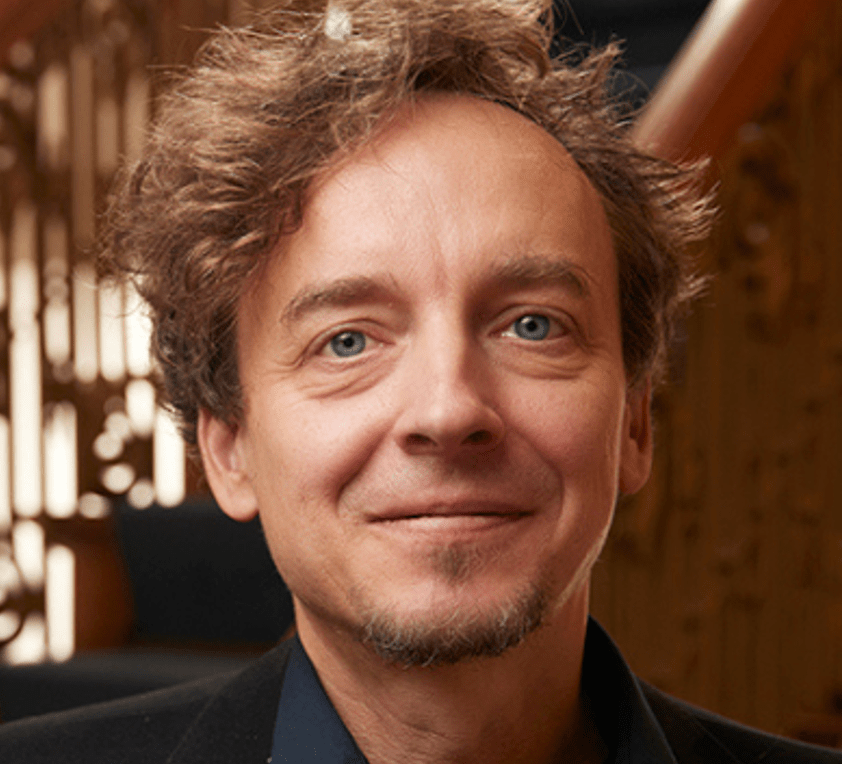
Christoph Henning is Professor of Philosophy and Humanism at the University of Humanistic Studies in Utrecht. His most recent publications include Theories of Alienation: From Rousseau to the Present (Routledge, 2024) and The Good Life beyond Growth: New Perspectives (with Hartmut Rosa, eds., Routledge 2017).
The Interview
Sarah Virgi: For your doctoral dissertation, you focused on Karl Marx’s social philosophy and social theory. What led you to the field of environmental philosophy?
Christoph Henning: Good question! But it was actually the other way around. I was first awakened ecologically, we read Hans Jonas at school. That moral duty for an ecological transformation seemed completely clear to me back then, my only question was (and still is): Why are we doing so little to save the planet? Marx became important for me to understand this question. The answer is: because we have put ourselves at the mercy of systemic constraints that ‘naturally’ work towards such destruction. It seems totally irrational, but this system has a huge power over us. I wanted to understand this political economy better, and was somewhat shocked when I realized how little the ethicists and philosophers actually understood of Marx. I therefore felt called to change this. I wrote in my introduction back then, for Marx the main victims of capitalism are three natures: the nature of society (second nature) through class division, the nature of individuals (through alienation), and nature itself (through exploitation and destruction).
SV: In your opinion, how has the Western history of environmental philosophy been depicted until recently? Is this a faithful picture?
CH: It depends on who you ask. I have the impression that since philosophy itself no longer cares enough about its own history, others have now adopted a kind of mythicizing historiography of philosophy (this can be found above all in cultural theory or sociology). This new trend sometimes leads to strange theses, very simplistic and very wrong. There is talk of “modernity”, “the” dualism of nature and culture, etc. Such broad outlines no longer allow us to see the really interesting ecological approaches in the history of philosophy at all; they are covered up by grand narratives. Latour in particular has caused a lot of mischief here. Perhaps he himself cannot be held responsible, he wanted to provoke his colleagues, but in the meantime some of his theses have become dogmas for many. That’s really annoying. If you look at older histories of philosophy, you realize that there was little discussion of ecological issues, but natural philosophy was basically explored quite thoroughly. However, the ecology movement itself has had its own attempts to tap the history of philosophy for intellectual precursors, and these things from the 1970s and 190s still make great reading.
SV: Could you elaborate on your approach to the history of environmental philosophy? How do you think that this history should look like? And how does it differ from the way in which it has been done before?
CH: Well, I think we should read the texts more thoroughly again and ideally consult colleagues from other disciplines (from environmental history or political science) when interpreting them. Some people often think too much in preconceived interpretative grids about block-like “epistemes”. Strangely enough, this is precisely the case on the side of those who once suggested “deconstructive” readings. But on topics such as nature or humanism, approaches influenced by post-structuralism often put forward astonishingly crude theses. On the other hand, there is currently a great fashion for Hegel among “pure” philosophers on the subject of nature, where there is too much talk of the “spirit” of man, which ultimately makes the gap between man and nature wider than necessary. The impetus provided by eco-Marxists such as Foster and Malm, and critical realism in general, has had a very beneficial effect here. However, I see very little connection between different debates on nature within philosophy.
SV: What role do “foreign” philosophies or other/non-Western philosophical traditions play in your vision of this history?
CH: They are very interesting and enriching! However, we should not adopt an “orientalist” approach and succumb to the trap of condemning “western” thinking and committing ourselves to some great “other”. European enlightenment has been inspired by non-Western sources for centuries, and what we read today in Andean or Indian philosophy, for example, should not be read as “pure”; we are mostly dealing with hybrids (which does not mean that they are all the same). I am very much in favour of reading not only European sources in philosophy, but also Asian, African, American Philosophy! But not under the assumption that we will find completely different ideas here. Different, but comparable. What it also changes is that you have to learn more about the social and physical backgrounds, not only from books, but also through your own experiences and encounters. This calls for new forms of learning.
SV: What impact do you think or expect that taking such an approach can have on the current discourse on the environment and on how the public engages with it?
CH: I think taking an intercultural approach should encourage us to look for common ground and not always pretend that universalist approaches are somehow our enemy. When we see that very different philosophies come to similar conclusions, it shows that philosophizing is not some luxury for rich kids only, but a draining human affair from which we should draw much more practical consequences. If we learn that different approaches agree that we need to have much more respect for nature, protect it much more resolutely and set strong limits to the global market, so much the better! The thing is that philosophy has very little power over how politics is conducted (there are also great myths about this, as if the great events in history somehow depended on what conceptual decisions the master thinkers made at some point). So I believe that at the moment, we need to be more united and make the (global) voice of reason heard, instead of opening up more and more trenches between us. That is why I see humanism, if it is truly global, going hand in hand with a resolute ecology.
©️Sarah Virgi | “Rethinking Environmental Philosophy and Its History”, IPM Monthly 4/2 (2025).
 IPM Monthly