

Introducing Metallurgy to Ming China:
A Conversation with Bichen Yan
By Nicola Milanesi
June 2025 – Welcome to “Global History of Philosophy,” a new section in IPM Monthly dedicated to exploring the rich and diverse landscape of philosophical thought across cultures and continents. This initiative aims to expand the boundaries of philosophical inquiry by moving beyond traditional Eurocentric frameworks and foregrounding the richness and diversity of global perspectives. By giving voice to scholars and thinkers from across the world, this section will trace how different cultures have cultivated, exchanged, and transformed philosophical ideas over time. Rather than treating philosophy as an isolated or self-contained discourse, Global History of Philosophy will examine its entanglement with the history of science, intellectual history, and broader movements of knowledge production.
Through a series of interviews, essays, and dialogues with leading academics, we seek to uncover the complex ways in which philosophical traditions have evolved through contact, conflict, and collaboration across linguistic, religious, and cultural boundaries. In doing so, this section hopes to contribute to a more inclusive, interconnected, and dynamic understanding of humanity’s shared intellectual heritage. But Global History of Philosophy is not only about historical recovery. It also seeks to understand what philosophy looks like today across different regions of the world. How do contemporary social, political, and cultural conditions shape the way philosophy is practiced, taught, and imagined? This section explores how philosophical traditions not only developed over time, but how they continue to evolve, respond to the present, and contribute actively to today’s global intellectual landscape.
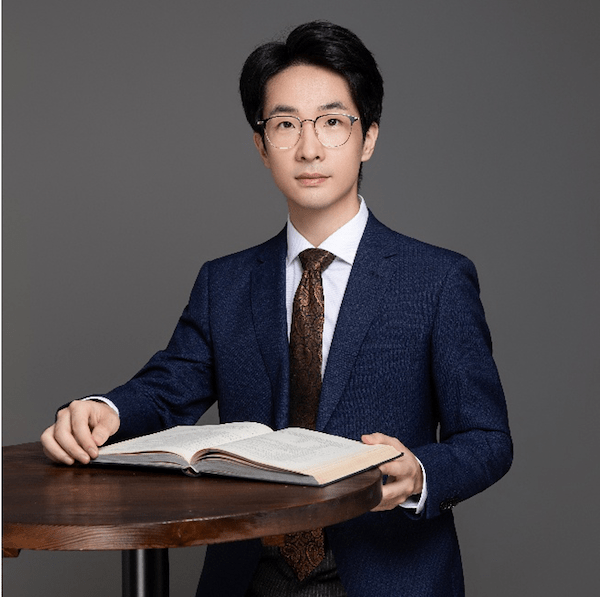
Today we’re joined by Bichen Yan, a postdoctoral researcher at Tsinghua University whose work explores the crossroads between materials chemistry and the history of science. In his current project, he dives into Kunyu gezhi, a 17th-century Chinese translation of Georgius Agricola’s De Re Metallica, tracing how Jesuit missionaries introduced European mining and metallurgical knowledge to Ming China. But this was no simple act of translation; instead, it became a site of philosophical negotiation, where the Western concept of matter as inert and form-receiving clashed with Chinese ideas of dynamic Qi. Bichen shows how this cross-cultural encounter reshaped the language, methods, and metaphysics of scientific understanding. Translation, in his view, is not just about words, but about worldviews in motion, an intellectual and material transformation that reveals how early modern science was built through global entanglements.
About Bichen Yan 严弼宸
Bichen Yan (严弼宸) Bichen Yan is a Postdoctoral Research Associate in the Department of Philosophy at Tsinghua. He earned his PhD in the history of science and technology from the Department of History of Science at Tsinghua University (China) in 2024. His research centers on medieval and early modern theories of minerals and matter, approached through a comparative lens that examines the ontological foundations of natural philosophy in both Europe and China. As a Chinese scholar, Bichen is deeply driven by the desire to build a bridge between traditional Chinese thought and modernity. Through this cross-cultural comparison, he seeks to explore whether ancient Chinese philosophy might offer a distinctive response to the challenges of modernity.
The Interview
Nicola Milanesi: Hi Bichen, thanks so much for joining us today! To start things off, I’d love to ask you to share a bit of your background with us. What inspired you to pursue the study of the history of mineralogy? Is there a particular moment, discovery, or influence that sparked your interest in this field? Additionally, are there specific aspects of this cross-cultural exchange that you find particularly intriguing or significant?
Bichen Yan: Hi Nicola! Thanks so much for having me. To answer that I have to go back to when I was a graduate student. My academic journey into the history of mineralogy begins with a deep fascination for chemistry. As an undergraduate majoring in materials chemistry, I enjoy working in the lab—manipulating substances and witnessing how chemical reactions create entirely new materials felt profoundly captivating. At the same time, I develop a strong interest in history and archaeology, taking numerous elective courses in those fields. Gradually, I become interested in combining these two passions by applying materials science methods to understand how ancient people worked with materials. This lead me to pursue a master’s degree in archaeometallurgy, a discipline that broadly examines how ancient societies extracted and processed mineral resources to produce metal artifacts.
While this background gives me a strong foundation in the practical aspects of ancient mineral use, my perspective shifts significantly during my doctoral studies. The archaeological approach often assumes that ancient people had the same utilitarian needs as we do today and that they merely lacked modern techniques. However, through my reading of philosophical works—especially the later phenomenology of Edmund Husserl and Heidegger’s metaphysics of technology—I begin to question this assumption. I realize that ancient understandings of minerals may have been far more diverse and complex than our modern view, which tends to treat minerals merely as resources to be extracted. This realization lead me to shift from studying the technical aspects of ancient metallurgy to exploring the intellectual history of how minerals were conceptualized. I now believe that understanding how people have historically thought about minerals offers a deeper insight into the epistemological underpinnings of modern life—where mining has become a metaphor for objectifying the world and for humanity’s boundless expansion into nature.
In 2015, something quite significant happens in the field of the history of science in China: a manuscript titled Kunyu gezhi (坤與格致, Investigations of the Earth’s Interior), long believed to have been lost for over 370 years, is rediscovered in the Nanjing Library—although it turns out to be only a partial copy. Perhaps because of my research interest in the history of mineralogy, I am especially drawn to this news. Kunyu gezhi had long been regarded as the first Chinese work to introduce early modern Western mineralogical and metallurgical knowledge. Although no one have previously seen its actual contents, historical sources indicate that it was a Chinese translation of De Re Metallica, the most famous work by Georgius Agricola. This translation was carried out by the Jesuit missionary Johann Adam Schall von Bell (Tang Ruowang) in collaboration with Chinese officials between 1639 and 1640. Their aim was to persuade the Chinese emperor to adopt and implement Western mining practices in order to revitalize the national economy.
Now that we finally have access to such a key text documenting the cross-cultural transmission of mineral knowledge, I naturally become eager to understand how Schall von Bell introduce Western mineralogical knowledge to China—what kind of epistemology lay behind that knowledge, how it is translated, and how Chinese readers respond. Would they readily accept these ideas? Of course, Kunyu gezhi also raises many other fascinating questions—for instance, what are Schall von Bell’s sources? Does he rely solely on Agricola’s work? What specific mining and smelting techniques does he present? But what interests me most is still the epistemological question: how do people understand what a mineral is? From the beginning, I am convinced that Kunyu gezhi would be an ideal source for exploring how different cultures conceptualize minerals—and, more broadly, how they understand nature itself.

NM: The discovery of the Kunyu gezhi manuscript sounds amazing! I’d now like to turn to one of the authors you’ve focused on most in your work, namely, Georgius Agricola. Often referred to as the “father of mineralogy,” Agricola is known for his classification of minerals based on their physical properties in De Natura Fossilium. Your research has explored his influence on modern mineralogy. How did Agricola’s system differ from earlier classifications? His decision to move away from the concept of formal causes in explaining minerals seems particularly relevant to modern mineralogy. Could you clarify how this shift changed the way minerals were studied—and whether it had any practical effects on mining and metallurgy?
BY: Thank you, I am very attached to the figure of Agricola. His De Natura Fossilium is often regarded as the first modern textbook of mineralogy, largely because it presents a classification and descriptive system based on the properties of minerals. Compared with his predecessors, Agricola includes a greater variety of mineral species and offeres empirical observations that have since been confirmed by modern mineralogical science. However, what interests me more than the “accuracy” of his observations or the resemblance of his classification to modern systems is the epistemological condition that made such knowledge possible in the first place.
Specifically, Agricola classifies minerals according to three kinds of properties: external characteristics, physical properties, and practical uses. This descriptive-classificatory impulse marks a clear departure from earlier thinkers. In Aristotle’s Meteorology, minerals are only roughly divided into stones and metals, based on the material and efficient causes of their generation. Aristotle is far more concerned with the causal explanation of mineral formation than with describing their observable features. Pliny the Elder, in his Natural History, does provide a vast array of mineral descriptions, but he doesn’t develop a coherent classification system—he too divides minerals simply into stones and metals, and often includes myths, anecdotes, and fables alongside empirical descriptions. In the thirteenth century, Albertus Magnus attempts to fill in the gaps in Aristotle’s mineralogy. Drawing on both Aristotelian natural philosophy and Plinian natural history, Albert proposes a more refined classification based on generative causes and also offers more detailed descriptions. However, the descriptions remain encyclopedic and unsystematic. He continues to treat the formal cause of a mineral as the principle of classification, and the description of a mineral still remains all-encompassing—in Foucault’s words from The Order of Things, it is a semantic network of everything associated with the object. He arranges minerals alphabetically, rather than grouping them based on their properties.
In contrast, Agricola’s system represents a decisive break. He classifies minerals strictly according to a predetermined set of essential features—namely their external appearance, physical characteristics, and usefulness to humans. For Agricola, these are the only properties worthy of consideration; myths, allegories, and symbolic meanings are excluded from mineral description altogether. This shift is only possible, I argue, because Agricola abandons the traditional natural philosophical goal of grasping the essence or formal cause of a mineral. Instead, he redefines minerals through their outward and functional attributes. Once the notion of mineral “essence” is relinquished, minerals became mere objects of observation. A new method of inquiry emerged—one grounded in objective description of observable and utilitarian traits.
The consequences of this shift are profound. Because human use is now considered a fundamental property of minerals, they come to be seen primarily as objects to be extracted and exploited. This epistemological change also underpinns Agricola’s forceful defense of mining in the opening chapter of De Re Metallica, where he refutes traditional moral and theological criticisms of mining and metallurgy. In my view, the modern industrial attitude toward nature—characterized by expansion and extraction—can be traced back to this conceptual transformation of mineral ontology initiated by Agricola.
NM: Part of your work examines how European and Chinese traditions have understood minerals, right? I’d like to ask you about some key differences in how these two traditions explain the formation and classification of minerals. Were these differences purely theoretical, or did they influence practical approaches to studying and utilizing minerals?
BY: Yes, that’s right, I have devoted part of my work to this issue. As I mentioned earlier, in sixteenth-century Europe, minerals gradually become objects of knowledge, and understanding them comes to rely on what we might call an objective and autonomous mineralogical science. This modern mineralogy is characterized by three key features: first, it no longer seeks to define the essence or formal cause of minerals, instead describing them through primary observable properties; second, it becomes a self-contained field that no longer needs to invoke the sacred order of the heavens—explanations based solely on subterrestrial material and efficient causes are considered sufficient; and third, it introduces a universal model of mineral formation, typically involving chemical reactions of mineral “Juice” under thermodynamic conditions.
Although this shift may seem like a turning point in European thought, one deeper feature persists: what I call a hylomorphic dualism. This becomes particularly evident when we contrast it with Chinese cosmological traditions. Put simply, European natural philosophy tends to interpret nature—including minerals—through the opposition of form and matter. For instance, in Albertus Magnus, the form is the principle that determines the essence of a mineral: it regulates how suitable matter, under the right conditions, can properly generate a specific mineral. Even in Agricola, who no longer refers to form as a metaphysical essence, the fundamental properties of a mineral serve as epistemological equivalents of form. These properties are part of human rationality and allow for the organization of sensory data into intelligible mineral categories.
By contrast, Chinese cosmology operates with an entirely different framework. Mineral formation is never seen in isolation but as one episode in the broader processes of cosmic transformation. Human bodies, mental states, and political events are all understood as integral parts of the same cosmic order. As a result, ancient Chinese concerns with minerals are rarely limited to their material composition or technical uses. Instead, minerals are often linked to questions of ethical cultivation and political virtue. This point is insightfully discussed by Dagmar Schäfer in her book The Crafting of the 10,000 Things.
Another major difference lies in metaphysical assumptions. Whereas Europe’s hylomorphic dualism divides being into opposed principles, Chinese thought follows a monistic Qi-theory of material transformation. The formation and destruction of things are explained as condensations and dispersals of Qi. While Qi can be distinguished into Yin and Yang, these are not conceived as opposed substances. In Kunyu gezhi, for example, we observe how Schall von Bell attempts to render Western notions of form and matter using the Chinese terms Yin Qi and Yang Qi, to make European mineralogical ideas more acceptable to Chinese readers. However, this translation strategy mistakenly assumes that Chinese thought shares a similar dualist ontology.
There are many such examples of “mistranslation” in Kunyu gezhi, which reveal just how fundamentally different the two traditions are in their understanding of minerals. And these differences are not merely theoretical—they have real consequences for how minerals are explored and used. One striking example is the method of locating ore veins. In China, under the influence of Qi-based monism, prospecting is understood as part of Fengshui, a traditional geomantic system for detecting the flow of Qi through natural landscapes, often used in Chinese mineral prospecting. Experienced individuals are believed to detect the flow of invisible Qi in mountains, rivers, and trees—since the Qi responsible for generating minerals also affects surrounding natural forms. This method is widely recorded in mining manuals written by Chinese officials in the seventeenth and eighteenth centuries, as well as in numerous local gazetteers that discuss earth Qi (Di Qi) in connection with mineral resources.
In contrast, Agricola’s methods for locating ore veins in De Re Metallica are grounded in a theory of aqueous mineral genesis and based on empirical observations of how veins extend through rock layers. There is no appeal to invisible or mystical forces; instead, Agricola categorizes geological formations suitable for mining and provides detailed diagrams showing how different types of veins extend underground, allowing for a systematic and practical approach to extraction.
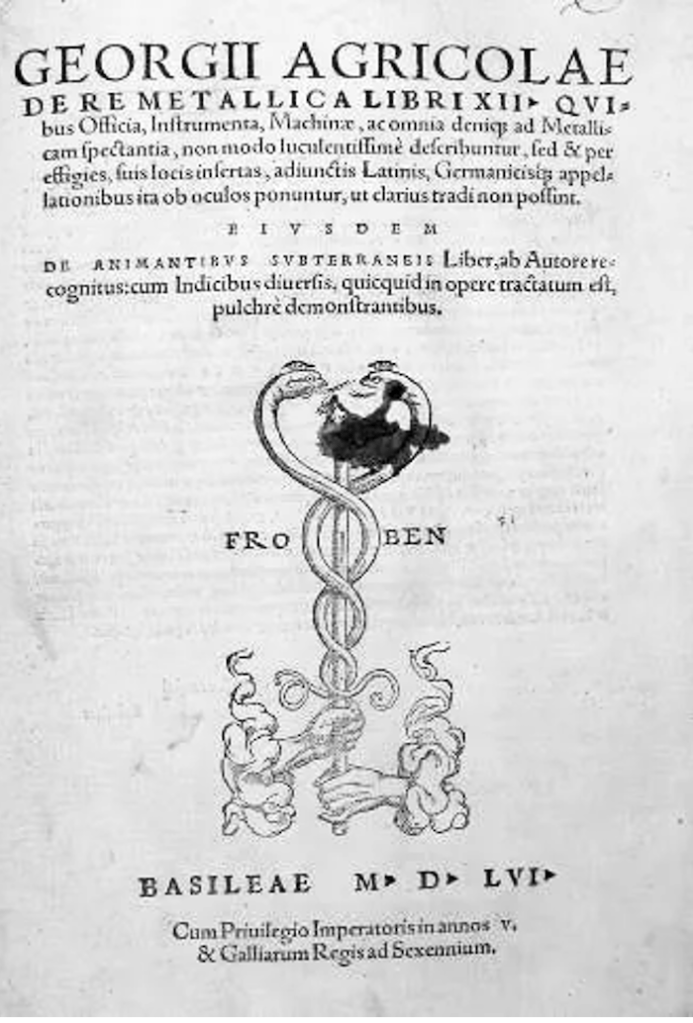
NM: Let’s turn now to your 2021 research (Assaying versus Smelting: A Research on the Second Volume of the Nanjing Library Kunyu gezhi Manuscript Copy) focused on the late Ming dynasty Chinese translation of Agricola’s De Re Metallica. What were your main findings? How did this translation influence mineralogical knowledge and mining techniques in China at the time?
BY: In my 2021 research on the Kunyu gezhi manuscript, I focus on two main questions. First, whether this manuscript represents a complete version of the original translation; and second, if not, which parts of the original it preserves. At the time, very few Chinese scholars examine the manuscript in detail, and most assume it to be a faithful and complete copy of the now-lost original. Only Hans Ulrich Vogel, a distinguished German sinologist, notes in passing that the manuscript is incomplete, though without offering a systematic analysis. My study closely compares the chapter structure described in the preface of the manuscript, the three extant chapters, and the corresponding sections in De Re Metallica. I find that the manuscript is indeed fragmentary, and crucially, it is missing the chapters that describe smelting techniques. The misconception arises because many readers mistake the chapter on assaying for one on smelting—something that becomes clear once compared with Agricola’s original.
Another key aspect of my research involves tracing the sources of knowledge behind Kunyu gezhi. While it is long assumed that the text is a straightforward translation of De Re Metallica, I find evidence that it draws on other sources as well. This suggests that Schall von Bell and his collaborators selectively compile and adapt content for a Chinese readership, rather than directly translating a single European text.
In 2024, Vogel and Cao Jin publish a new and much more comprehensive article titled Adam Schall von Bell’s Investigations of the Earth’s Interior (Kunyu gezhi, 1639–1640): Recent Achievements and Future Prospects, which confirms many of my earlier findings. They also go further, identifying additional textual sources beyond Agricola and documenting the fate of Kunyu gezhi after its completion. As Vogel and Cao’s work shows, the influence of Kunyu gezhi on Chinese mineralogical knowledge and mining practice remains extremely limited. The manuscript is never printed or widely disseminated, in part due to the Ming and early Qing governments’ suspicion of mining. Although the Chongzhen Emperor—reportedly impressed by the utilitarian promise of the work—briefly considers implementing its proposals, the idea is ultimately blocked by his ministers and derailed by the outbreak of war. The book soon falls into obscurity and eventually disappears for centuries.
While it is unfortunate that the translation does not have a lasting technical impact, I believe its reception at the time remains an important object of study. In particular, the resistance of late Ming officials to the introduction of foreign mining practices reveals much about the political and moral frameworks that shape early modern Chinese attitudes toward natural knowledge and resource extraction.
NM: So, last question. Looking ahead, what specific questions or challenges in mineralogy do you plan to explore in your future research? Are there any projects you are currently working on to investigate these topics further? How important do you think interdisciplinary approaches – combining history, philosophy, and science – are for advancing our understanding of minerals?
BY: Thank you for your questions. The further research I mention now on Kunyu gezhi also forms the core of my current project. Specifically, I examine how the new understanding of minerals—and, more broadly, of nature—represented in De Re Metallica is transformed, received, or resisted during its transmission into late Ming China. The historical value of Kunyu gezhi, despite its failure, lies precisely in its ability to illuminate the epistemological and cultural processes through which early modern natural philosophy is introduced across civilizations. I approach this episode through three key perspectives: first, I explore how the Jesuits—deeply shaped by an Aristotelian worldview—grapple with the philosophical rupture embedded in Agricola’s work, which in many ways overturns Aristotelian natural philosophy; second, I analyze the Jesuits’ translation strategies: how they selectively render and adapt Western mineralogical theories and metallurgical practices so they become intelligible and acceptable within the Chinese intellectual and technological context; third, I study how Chinese literati respond to these translated theories and techniques—particularly how they interpret the deeper natural-philosophical assumptions embedded in the text.
I view the translation and attempted promotion of Kunyu gezhi as what Michel Foucault calls a “discursive event.” My goal is to map the conflicting strategies and discursive practices of various actors: Jesuits well versed in Western science and driven by missionary objectives; technically minded Chinese officials who hope to use Western mining practices to enhance state revenues; Confucian scholars who reject such techniques on cosmological and moral grounds; and the emperor himself, who acts as both primary reader and ultimate arbiter. Their conflicting interests shape the trajectory of mineralogical knowledge in late Ming China and explain why Kunyu gezhi is never printed or widely circulated. Through a close reading of historical sources, I aim to reconstruct the contingent and complex discursive genealogies behind this translation episode, thus contributing to a deeper understanding of Chinese civilization’s transformations in the early modern era.
This project requires an interdisciplinary approach, combining science, history, and philosophy—something I embrace since the beginning of my academic career. Many modern emotions, ideas, and social phenomena are deeply entangled with the broader problem of modernity. Yet we are immersed in modern conceptual frameworks and often fail to recognize the metaphysical assumptions that make them possible, struggling to imagine alternative worldviews. This insight is one of phenomenology’s most powerful contributions to my thinking.
It is undeniable that science and technology shape modern civilization primarily. The emergence of new epistemologies, worldviews, and even political transformations often ties directly to scientific change. Reflecting on science is not only important but urgent for Chinese scholars, because the introduction of modern Western science in the seventeenth century marks the beginning of China’s unprecedented civilizational upheaval. That moment shatters traditional knowledge frameworks, alters the course of Chinese intellectual history, and deeply affects social, political, and economic life. Yet for a long time, the cultural foundations of modern science—its metaphysical assumptions and modes of thought—remain poorly understood in Chinese scholarly discourse, despite their formative role in shaping modernity. Scientific culture, which enables new worldviews and ways of organizing knowledge, has often been oversimplified or mischaracterized. To address this gap, we must examine not only the content of scientific knowledge, but also the contingent historical processes that allow it to take root and transform societies.
In short, for anyone who wishes to work in this space, the relationship between philosophy, science, and history is inseparable. Without philosophical reflection, scholarship becomes complacent and loses its critical edge; without confronting scientific content, it risks irrelevance in the face of contemporary crises; and without historical grounding, it becomes empty rhetoric or ideology, detached from the real world. I am well aware of the difficulties of maintaining such a balance in today’s increasingly specialized academic environment—but I remain committed to learning new methods and theories, and to sustaining a productive tension across disciplinary boundaries.
NM: Thank you, Bichen, it’s been a truly fascinating conversation! I hope we’ll have more opportunities to talk in the future.
BY: Thanks so much for having me, Nicola, it’s really been a pleasure!
©️Nicola Milanesi | “Introducing Metallurgy to Ming China”, IPM Monthly 4/6 (2025).
 IPM Monthly