

Como masa para tamales
By Isabel Inzunza Gomez
February 2025 – Madrid is a home away from home. At least that’s what I tell myself every time I land in Barajas and head straight for a café con leche that is, objectively, too expensive for what it is. But nostalgia does funny things to taste buds, and so, there I was, walking the streets of Madrid, feeling sentimental and vaguely hungry, when I stumbled upon a Mexican restaurant.
Now, as any self-respecting Mexican abroad knows, finding good Mexican food outside of Mexico is like searching for a decent avocado in Scandinavia—possible, but mostly a game of heartbreak and a dip in the finances. Because even if you do find it, chances are it’ll cost you the equivalent of a week’s worth of tacos back home. Still, curiosity won, and I sat down. And then, there it was, buried between the usual suspects—tacos al pastor, enchiladas, and a highly suspicious quesadilla de huitlacoche—a rare sight in these parts: tamales.
At that moment, something clicked. Día de la Candelaria was just around the corner, and with it, the annual tradition of paying my gastronomic debts. Back home, the rules are clear: if you were lucky (or unlucky) enough to find the Niño Dios in your slice of Rosca de Reyes on January 6th, you must host a tamaliza on February 2nd. No exceptions. The sacred contract of Mexican culinary justice is absolute.

And so, since I was handed the Coffee Break section for this edition—my first as Vice Editor-in-Chief—I figured I’d take the opportunity to write something personal. Not a grand editorial or an abstract think piece, but a reflection on home, memory, and the kind of traditions that follow you, no matter how far you stray. Because if a tamal on a menu in Madrid can send me spiraling into family history and Mesoamerican mythology, then clearly, some things are meant to be written down.
Seeing those tamales on the menu took me back to my childhood, to my great-aunts in the kitchen, sleeves rolled up, orchestrating the great pre-Candelaria ritual. It was a sight to behold: a carefully choreographed dance of masa, corn leaves, and whispers of family gossip, all set to the background noise of a telenovela nobody was really watching. They would spend the entire day preparing, steaming, and taste-testing, turning what was technically a Catholic tradition into a family reunion that had little to do with the purification of the Virgin Mary and a lot to do with who could make the fluffiest tamal. But beneath the surface of this culinary harmony lurked the Great Tamal Debates—an annual tradition just as sacred as the meal itself. Every step of the process was up for contention: You’re over-mixing the masa, it’s going to be dense! That filling is too watery; do you want them to fall apart? You’re folding them wrong, they’re going to cook unevenly! Accusations flew across the kitchen, each one delivered with the conviction that a single misstep would lead to absolute disaster. And yet, year after year, against all odds (and against all the alleged errors), the tamales always turned out just right.
And then, just like that, it was gone. Not the tradition—Candelaria still comes around every year, and tamales remain a staple—but the recipe. The old, handwritten one, passed down through generations, the one my aunts swore was the way to make tamales. At some point, in the chaos of moving houses, funerals, inheritances, and shifting priorities, it was lost. And with it, the voices that once argued over every step of its execution. All my great-aunts are gone now, leaving behind only memories of their chili-dusted debates and meticulous rituals. My grandmother remains—the last of a family formed of only women and lost men. She no longer makes tamales, and I never learned how to make them the way they did. What remains is the taste, the longing, and the certainty that something irreplaceable slipped through our fingers, just like that old, forgotten recipe.
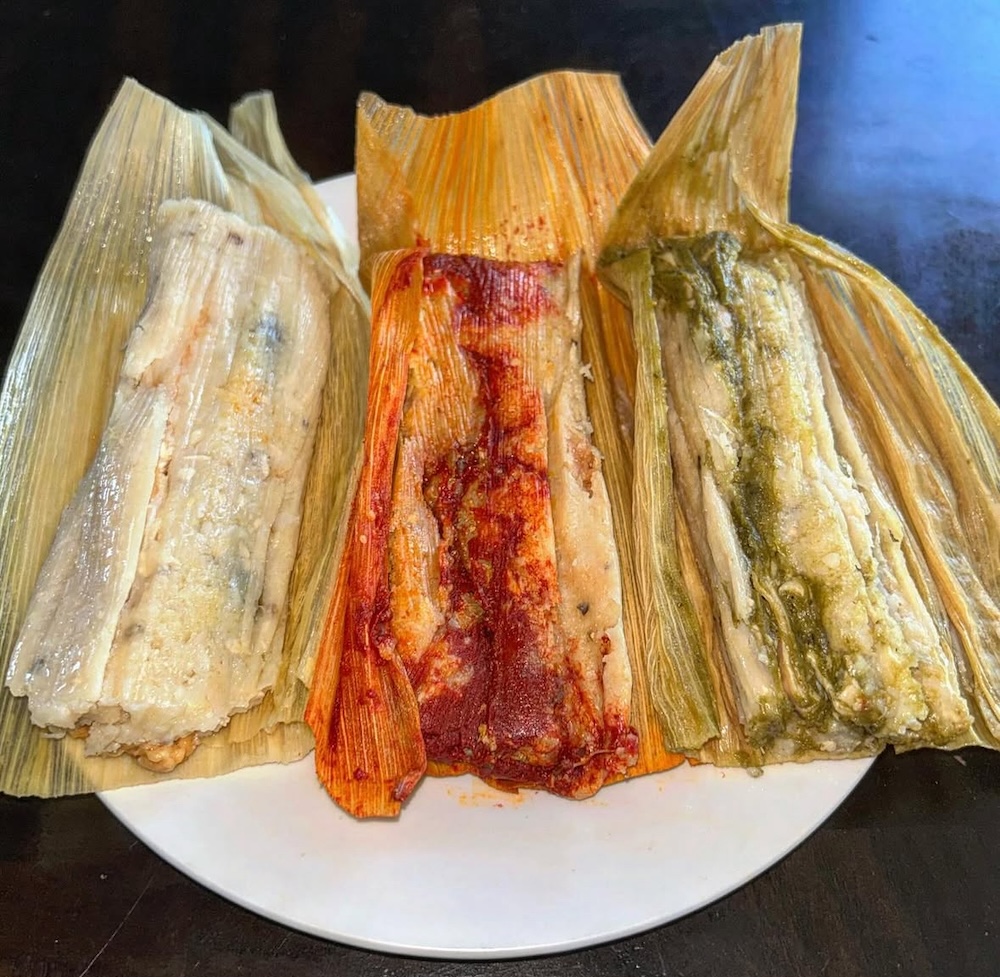
This, naturally, led me to a rather dramatic reflection about intellectual property and history. We always think about lost manuscripts, forgotten inventions, vanished languages. But what about recipes? The knowledge of how to get just the right amount of lard in the masa to achieve that elusive balance of fluff and density? Or the perfect proportion of chilies to achieve a sauce that doesn’t just burn but sings? These are blueprints of culture, and yet, they are rarely written down, let alone protected.
And tamales are no exception. Their history stretches far beyond my family’s kitchen, beyond Catholic traditions, and even beyond Mexico itself. The word tamal comes from the Náhuatl tamalli, meaning “wrapped,” but versions of this dish have existed across Latin America for millennia. The earliest evidence suggests they were part of the diet of Mesoamerican civilizations long before the Spanish arrived. The Mexicas, Mayas, Olmecs, and other pre-Hispanic cultures prepared them as sacred offerings to the gods, especially to Tláloc, the rain god, in hopes of securing fertile harvests. Maize, after all, was more than just food—it was divine. The Popol Vuh, the sacred book of the K’iche’ Maya, tells us that humanity itself was created from maize, making every tamal a bite of mythological continuity.
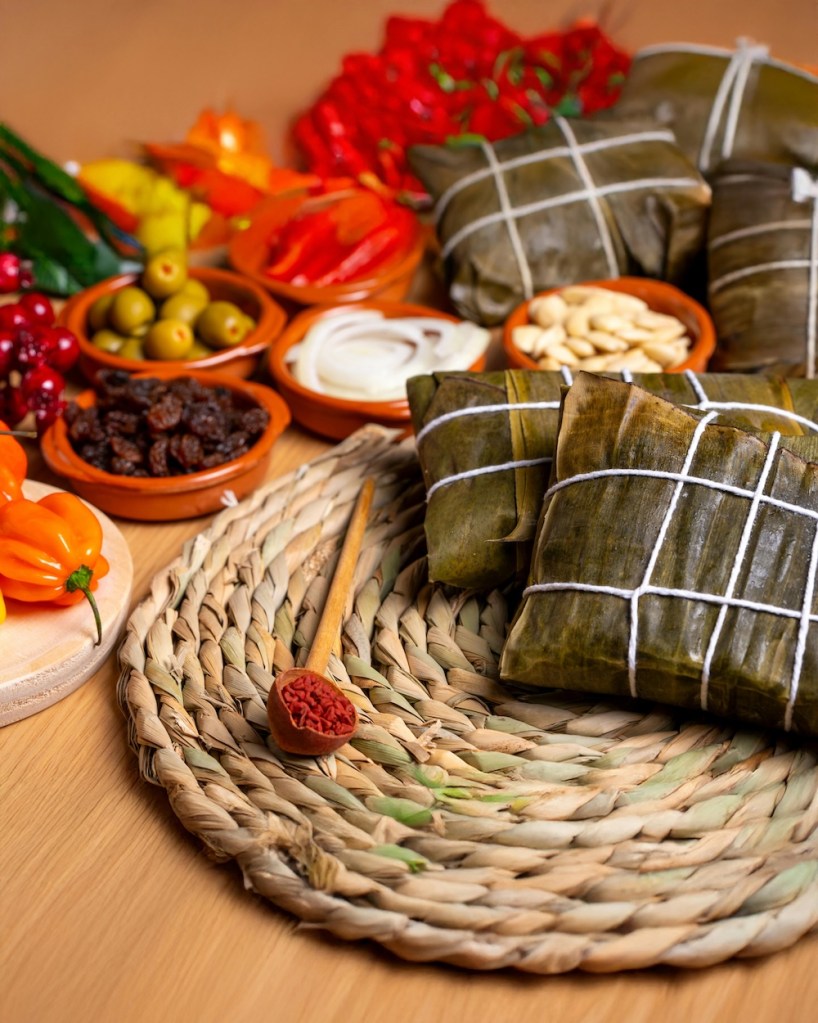
Tamales weren’t just food; they were sustenance for warriors, travelers, and laborers, portable energy bars long before the concept existed. The Mexicas are said to have offered them during ten major religious festivals, and the Mayas left remnants of their tamal-making techniques in archaeological sites across Central America. Fray Bernardino de Sahagún, in his Historia General de las Cosas de Nueva España, meticulously recorded the various types of tamales consumed by indigenous peoples, including those filled with turkey, beans, fish, and even insects.
When the Spanish arrived, they didn’t erase tamales but instead folded them into new traditions, just as they did with so much of indigenous culture. The fusion of Catholicism with native practices found its way to Día de la Candelaria, aligning the presentation of Jesus at the temple with pre-Columbian rituals that celebrated the start of the agricultural cycle. What once were tamales placed on altars for the gods became tamales prepared in kitchens for family and friends, a culinary relic of an ancient past that persists to this day.
But tamales are not just Mexican. They have traveled, adapted, and evolved, taking on different names, ingredients, and meanings across the Americas. In Guatemala, chuchitos are dense, tightly wrapped tamales served with a tomato-based sauce. In El Salvador, tamales pisques are stuffed with refried beans and encased in banana leaves. In Venezuela, the holiday season isn’t complete without hallacas, tamales filled with a stew-like mixture of meat, raisins, olives, and capers. Cuba has its tamales en cazuela, an unwrapped, porridge-like tamal, while Puerto Rico has pasteles, made with a dough of green bananas and yautía instead of corn.
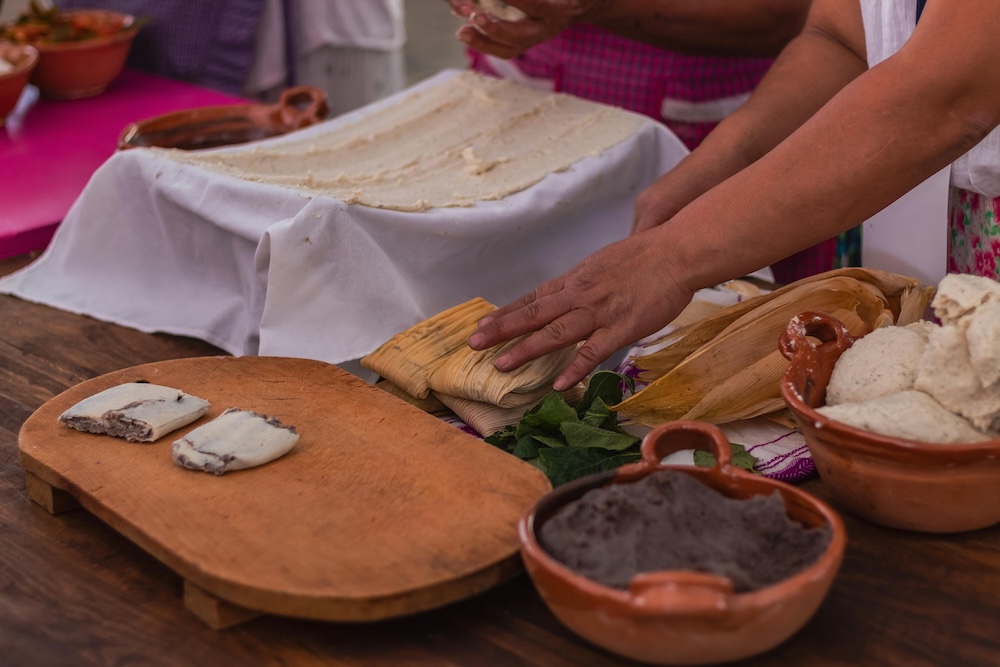
Even within Mexico, the variations are staggering—more than 500 documented types. The Oaxaqueño tamal, wrapped in banana leaves, is famous for its rich mole filling, while in the Yucatán, mucbipollo is baked underground during Hanal Pixán, the Mayan Day of the Dead. In the north, Coahuila’s tamales are small and thin, filled with shredded beef and red chile sauce, while in Veracruz, zacahuil can feed an entire village, stretching up to five feet long. There are sweet tamales dyed pink and flavored with cinnamon and raisins, tamales infused with anise, tamales made with pumpkin seeds and hoja santa, and even tamales stuffed with charales (tiny fish) for those who like a bit of extra crunch.
And then, there are the uchepos of Michoacán—the tamales of my great-aunts who swore by their delicate, fresh corn flavor. Unlike other tamales, uchepos are made with young, tender corn instead of nixtamalized masa, giving them a softer, almost pudding-like texture. They’re steamed in their own husks and served with crema, salsa, or crumbled cheese, and for my great-aunts, they were the undisputed peak of tamal-making perfection.
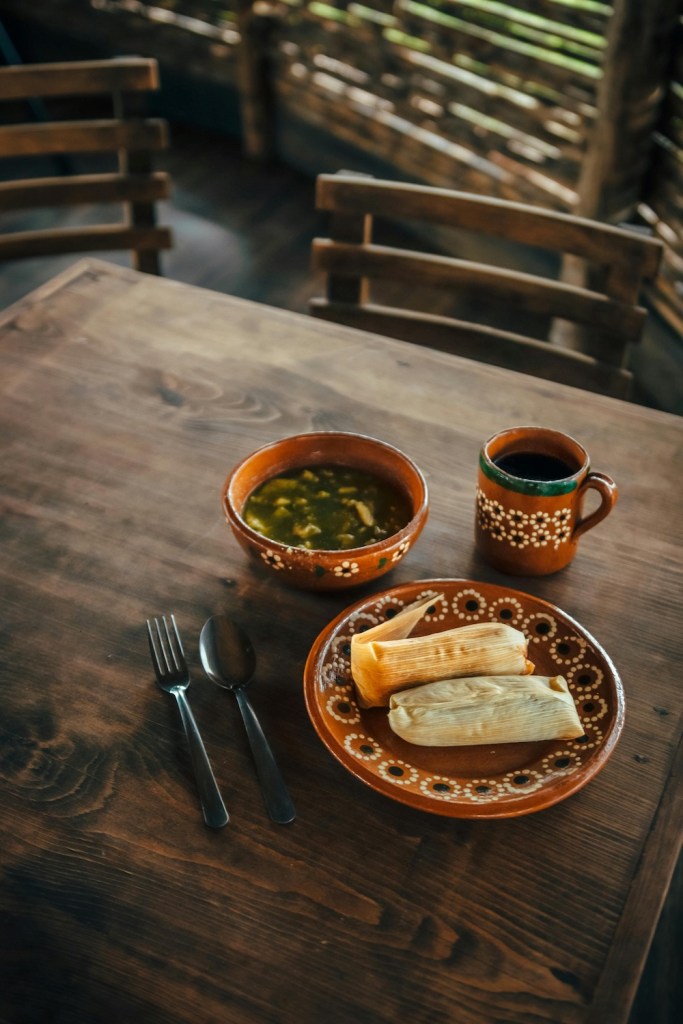
In a way, every tamal we eat today is an artifact of survival—both culinary and historical. They were here before the Spanish arrived, before the printing press could have immortalized them, before the idea of “Mexican food” was anything other than the daily sustenance of a people who saw maize as sacred. And despite wars, colonization, globalization, and the occasional dietary fad that dares to label them “unhealthy,” tamales persist. They persist in kitchens where great-aunts argue over masa consistency, in the hands of street vendors who unwrap steaming bundles on chilly mornings, and in distant restaurants where a misplaced tamal on a menu can transport a wandering Mexican back home—if only for a moment.
I did not order the tamales that night in Madrid. Maybe I was afraid they would disappoint, or maybe I just wasn’t ready for the existential crisis of a tamal that tasted more like homesickness than home. Instead, I made a promise to myself: next Candelaria, I will reconstruct my great-aunts’ lost recipe. It won’t be exactly the same, of course. But then again, tradition isn’t about preservation—it’s about continuity.
And if the masa is a little too dry or the filling slightly off? Well, at least I won’t be the first to get it wrong.
©️Isabel Inzunza Gomez | “Como masa para tamales”, IPM Monthly 4/2 (2025).
 IPM Monthly