

Between Light and Darkness: The Ancient Celtic Roots of a Portuguese Halloween
By Ana Maria Machado
About the Ana Maria Machado

Ana Maria Machado is a Project Manager in Creative Industries specialising in innovation and cultural development.
“Whoever eats the goat and warms themselves by the Canhoto shall have a year of good fortune!”
Regional saying
Throughout all ages, humankind has celebrated festivals, often with a deeply religious character; the worship of the gods lay at the heart of all festive expressions. In the soul of the people, traces of ancient pagan beliefs still endure, keeping these old traditions alive for future generations.
The Feast of the Goat and the Canhoto is one of Portugal’s oldest traditions, comparable in many ways to Halloween. It marks the transition from the light season (Summer) to the dark season (Winter). This celebration takes place in Cidões, a tiny and almost forgotten village in the municipality of Vinhais, in the district of Bragança, with fewer than twenty inhabitants. However, on the weekend following October 31st, it is filled with thousands of visitors who come to celebrate this ancient pagan ritual.
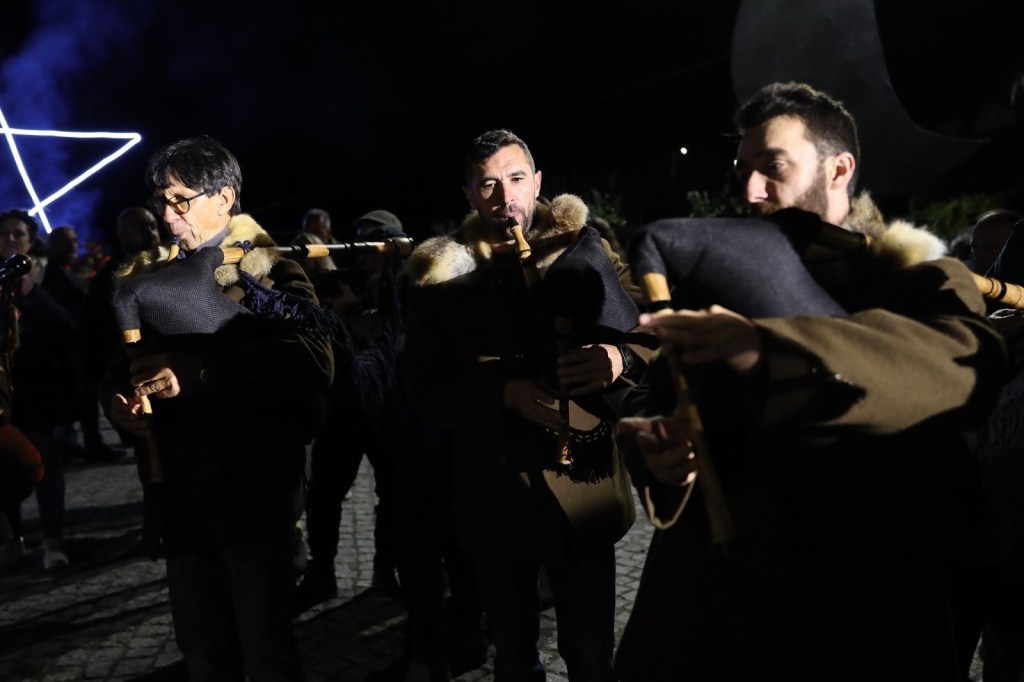
This festival is linked to the Celtic celebrations of Samhain, a time when it was believed that the souls of the dead returned to their homes to visit family, seek food, and warm themselves by the fire. Historically, prior to the Samhain celebrations, however, it marked the end of the summer harvest and the welcoming of winter, a season of hardship and endurance. It was among the Celtic people who inhabited northern Portugal, particularly the Zoelae, that this tradition was born and has been kept alive since pre-Roman times.On this night, the village of Cidões is illuminated by a giant bonfire, Celtic performances, and an atmosphere thick with mysticism. The festival begins at sunset with the Ritual of Sunset and Moonrise, and the bonfire is lit as night falls. The fire, from stolen wood and a colossal ten-tonne canhoto log, becomes the heart of the celebration.

© Câmara Municipal de Vinhais, 2025
Traditionally, an infertile goat, or matchorra, was cooked in great iron pots. Today, more than 300 kilograms of goat meat are served, accompanied by local products such as chestnuts, dried figs, and walnuts.
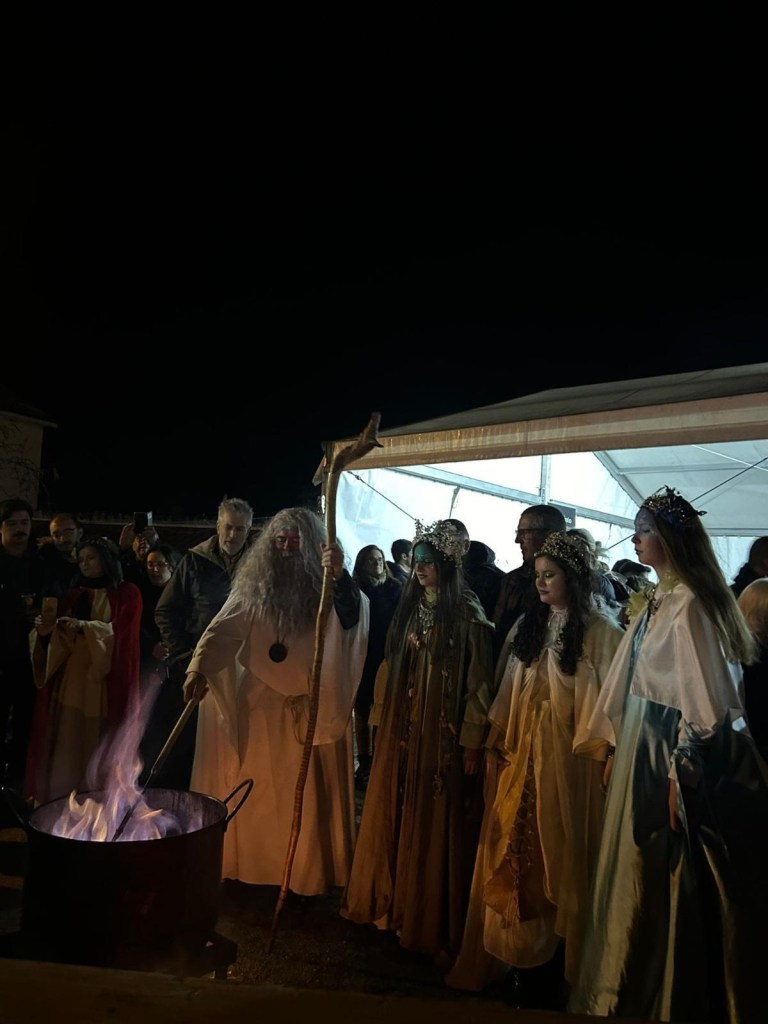
Celtic druids and goddesses preside over the preparation of the Queimada Celta, a traditional Celtic drink made with Portuguese aguardente, sugar, lemon and orange peel, and coffee beans. This is prepared and consumed as part of a communal ritual shared with everyone present.
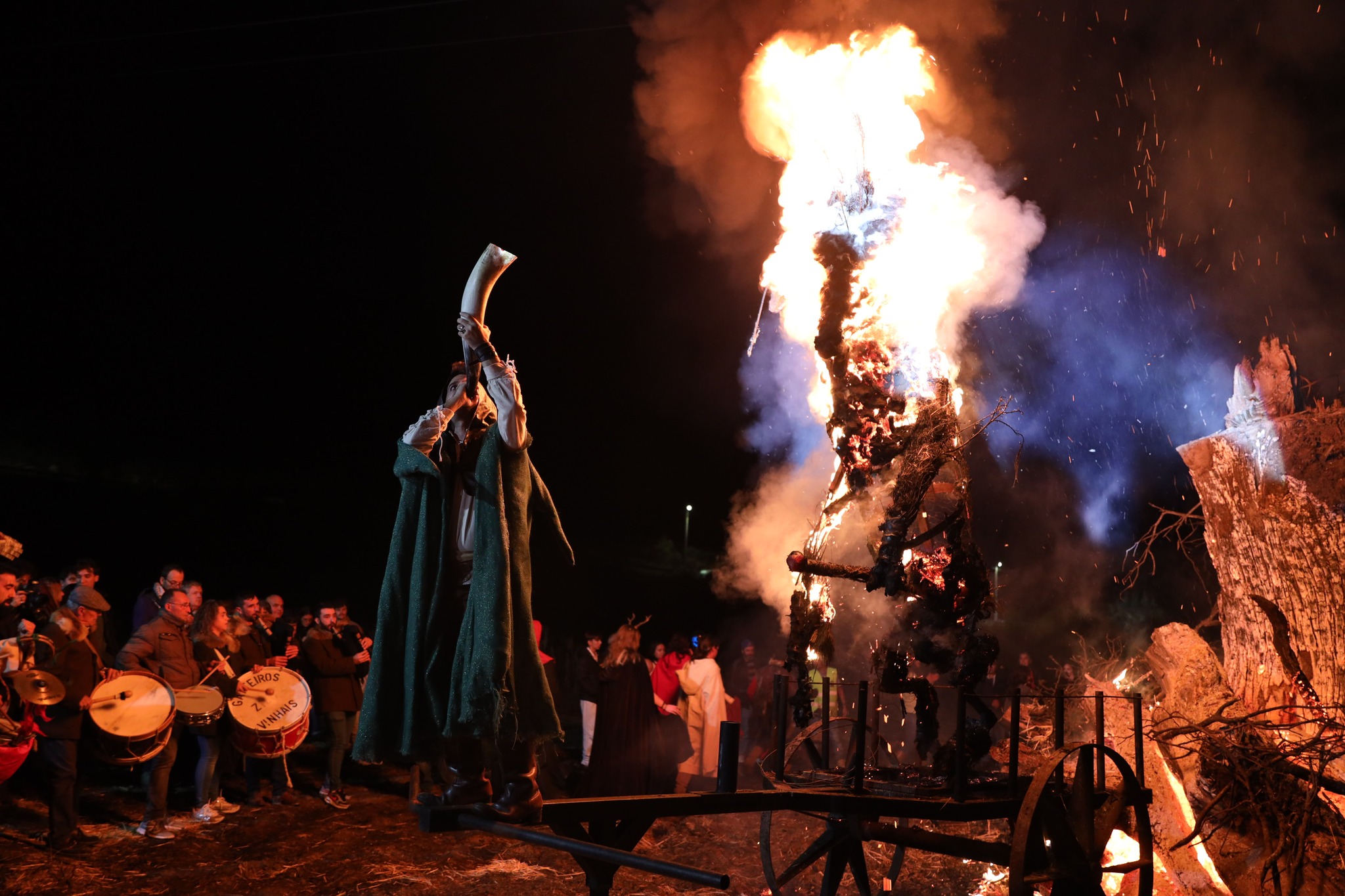
Next comes the burning of the male goat, which symbolises the expulsion of evil and bad luck from the village, while invoking fertility and prosperity for the coming winter. The “goat” is now an enormous figure, standing more than seven meters tall, built by local schoolchildren to include younger generations as part of this unusual cultural heritage.

© Câmara Municipal de Vinhais, 2024 © Câmara Municipal de Vinhais, 2025
«We burn the Goat and eat his Wife, the infertile goat, the Matchorra».
Regional saying
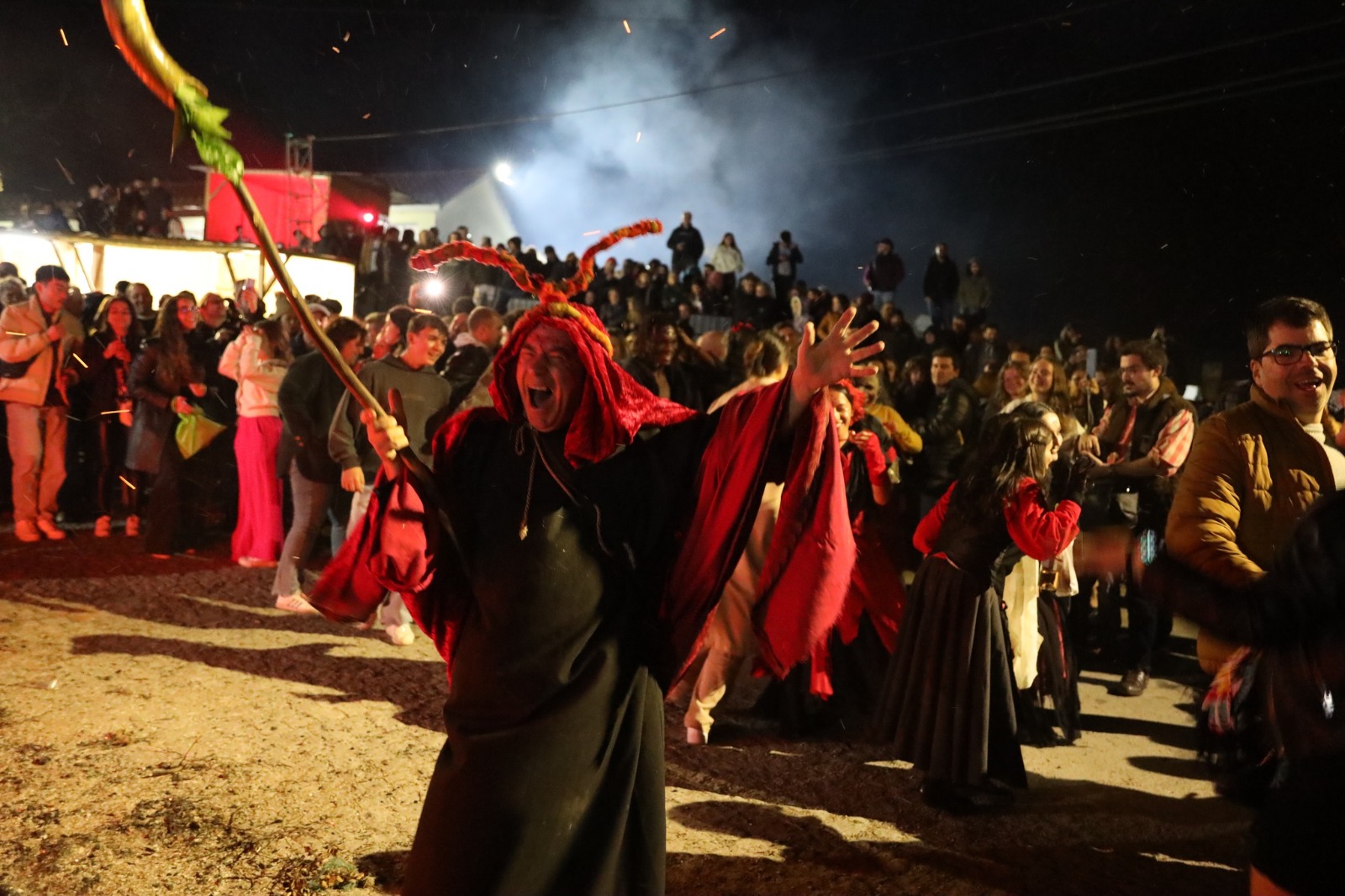
At midnight, the Devil appears, embodied by a masked careto (masked character from a Portuguese folk tradition) riding a cart pulled by oxen, to torment and frighten the participants. The night then dissolves into chaos: young people steal flowerpots and scatter them through the streets, overturn carts and wagons, and drag a creaking ox-cart around the village to keep everyone from sleeping.

In the past, when morning came, the villagers would find their homes and streets turned upside down as if, indeed, it had all been “the Devil’s work.”
More than just folklore, this tradition speaks to something deeply human: our need to give shape to mystery, to honour the cycles of nature, and to find warmth, both literal and spiritual as we step into the dark half of the year.
©️Ana Maria Machado | “Between Light and Darkness”, IPM Monthly 4/11. (2025).
 IPM Monthly